Comprehensive Wellness
Holistic Wellness Programs When Practices Work Together, They Work Differently
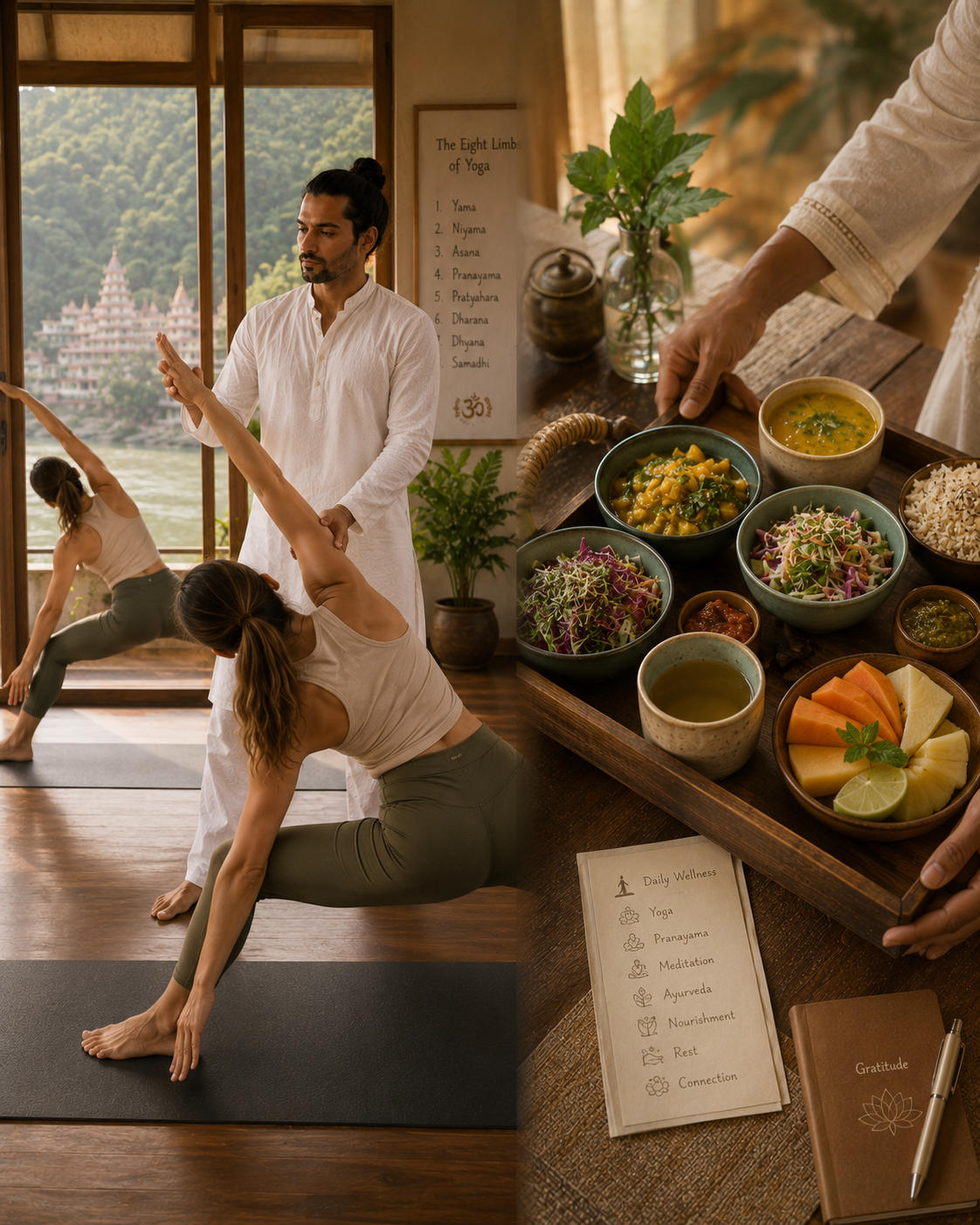
Our holistic wellness programs combine yoga, meditation, breathwork, sound healing, and lifestyle guidance into coherent multi-week experiences. The specific design is not a menu of activities it is a structured sequence in which each discipline prepares the ground for the next.
Why combining practices produces something different from practising them separately
The word "holistic" is overused and frequently meaningless in wellness marketing. We use it deliberately to mean something specific: that the practices in our programs are selected to work together not as a collection of independent offerings, but as a structured sequence in which each discipline creates the conditions that allow the next to work more deeply.
The functional relationships are concrete. Yoga asana releases the physical holding patterns that prevent comfortable seated posture making meditation accessible in the body before it must be accessible in the mind. Pranayama settles the nervous system and increases blood oxygenation making meditation accessible in the nervous system before it must be accessible through discipline alone. Meditation develops the quality of non-reactive, non-judgmental attention making the experience of yoga and breathwork richer, because the same quality of awareness that meditation develops is exactly what yoga and pranayama require to produce their deepest effects.
Sound healing provides periodic deep rest the physiological environment in which the body integrates the changes produced by active practice. Lifestyle guidance ensures that what is built during practice sessions is not dismantled by habits outside them. Personal guidance allows the program to respond to what is actually happening for the individual student rather than following a fixed script.
When these elements are present together in a thoughtfully designed sequence, the total effect is observably greater than the sum of the parts. This is what the classical yoga tradition understood and why Hatha yoga was always taught as a complete system asana, pranayama, pratyahara, dharana, dhyana rather than as individual offerings.
What our holistic wellness programs include and why each component is there
Daily Yoga Practice
Morning yoga sessions typically Hatha or a gentle Vinyasa that begin before 7am to take advantage of the early morning physiological state (lower cortisol, fresher alertness). These sessions combine asana, pranayama, and brief meditation, building a stable physical and energetic foundation throughout the program. The style and intensity are calibrated to the student's experience level and current capacity not to a fixed program template.
Dedicated Meditation Sessions
Separate meditation practice sessions typically in the late afternoon when the residual energy of the morning practice has settled and the nervous system is ready for the next deepening. These sessions introduce and develop specific techniques progressively across the program duration: breath awareness first, then body scan, then open monitoring, with Metta practice woven throughout. Students receive instruction on home practice between sessions.
Pranayama and Breathwork
Regular standalone breathwork sessions distinct from the pranayama component within yoga classes developing specific classical techniques in sequence: Nadi Shodhana first (foundational balance), then Ujjayi (integration into movement), Bhramari (parasympathetic activation), Kapalabhati (energising), and Sama Vritti with retention for advanced students. Students leave the program with a working knowledge of their personal pranayama practice.
Sound Healing Sessions
Two to three sound healing sessions in longer programs typically scheduled after the most physically demanding days, as restorative elements that support physiological recovery and nervous system integration. In-person programs use Tibetan and crystal bowl sessions; online programs may use recorded sound sessions combined with guided body awareness. The sound healing component serves both as rest and as a deepening of the meditative quality developed elsewhere in the program.
Lifestyle and Routine Guidance
Structured conversations (not lectures) on: sleep how the practices relate to sleep architecture and what sleep habits support or undermine the program's effects; diet not a prescriptive nutritional plan, but a discussion of how food choices interact with the energy states that yoga practice produces; digital hygiene the relationship between screen time and the quality of attention the program is trying to develop; and daily routine how to structure mornings and evenings to maintain what the program builds after it ends.
Individual Guidance and Check-Ins
Scheduled one-on-one conversations with the lead teacher at the midpoint and end of the program and informally whenever needed. These sessions address what is actually happening in the student's practice: what is working, what is difficult, what has changed, what specific guidance is needed. Programs without this component are teaching to an imagined student; programs with it can respond to the actual person in front of them. This is what makes the difference between a structured wellness experience and a genuine personal development program.
The students who gain most from holistic wellness programs
People who have tried individual practices without consistent results
Students who have taken yoga classes regularly for years without finding a deeper practice, or who have attempted meditation through apps without establishing a genuine habit, often respond strongly to the structured combination of a holistic program. The integration of practices and the personal guidance that accompanies it provides the context and support that individual drop-in classes cannot.
People at significant life transitions
Career changes, relocation, periods of recovery, post-grief transitions, major personal decisions these are moments when the kind of clarity and groundedness that integrated wellness practice produces is particularly valuable. A holistic program during a life transition provides both the practical tools (yoga, meditation, breathwork) and the reflective space (personal guidance, lifestyle conversation) to navigate the transition with more presence and less reactivity.
Serious practitioners wanting a complete reset
Students with established individual practices regular yoga practitioners, meditators, those who exercise regularly sometimes reach a point where the individual practices feel stale or plateaued. A holistic program brings the practices into relationship with each other in a way that individual practice cannot, often revealing dimensions of each practice that isolation has obscured.
Design a program that fits your life
Tell us what you are looking for how long you have, what practices you currently have, and what you are hoping to achieve. We will design something appropriate.
A body that has been moved brings more to stillness. A stillness that has been practised brings more to movement. A breath that is consciously worked makes both available in a way that neither achieves alone.
Related programs at The Seventh Center
Explore All Programs & Services
Quickly select any service below to explore schedules, curriculum, and direct WhatsApp booking.
Tell us what you need we will build the right program around it.
Share your experience level, your goals, your timeline, and whether you are thinking online or Rishikesh. We will put together a proposal that makes sense for your specific situation.